

A few years ago, artificial intelligence felt like a technology that companies were cautiously experimenting with. Businesses launched pilot programs, tested automation tools, and explored machine learning projects without making them central to their operations. Today, that approach has changed dramatically. AI is no longer sitting on the edge of business strategy—it has moved directly into the center of it.
What’s even more interesting is where the growth is happening. The business opportunities created by AI adoption aren’t limited to software companies or Silicon Valley startups. They’re appearing in hospitals, retail stores, manufacturing facilities, financial institutions, logistics networks, and media organizations. As AI becomes part of everyday operations, entire industries are discovering new ways to create value, improve customer experiences, and build scalable business models.
Why AI Adoption Is Creating More Than Just Efficiency Gains
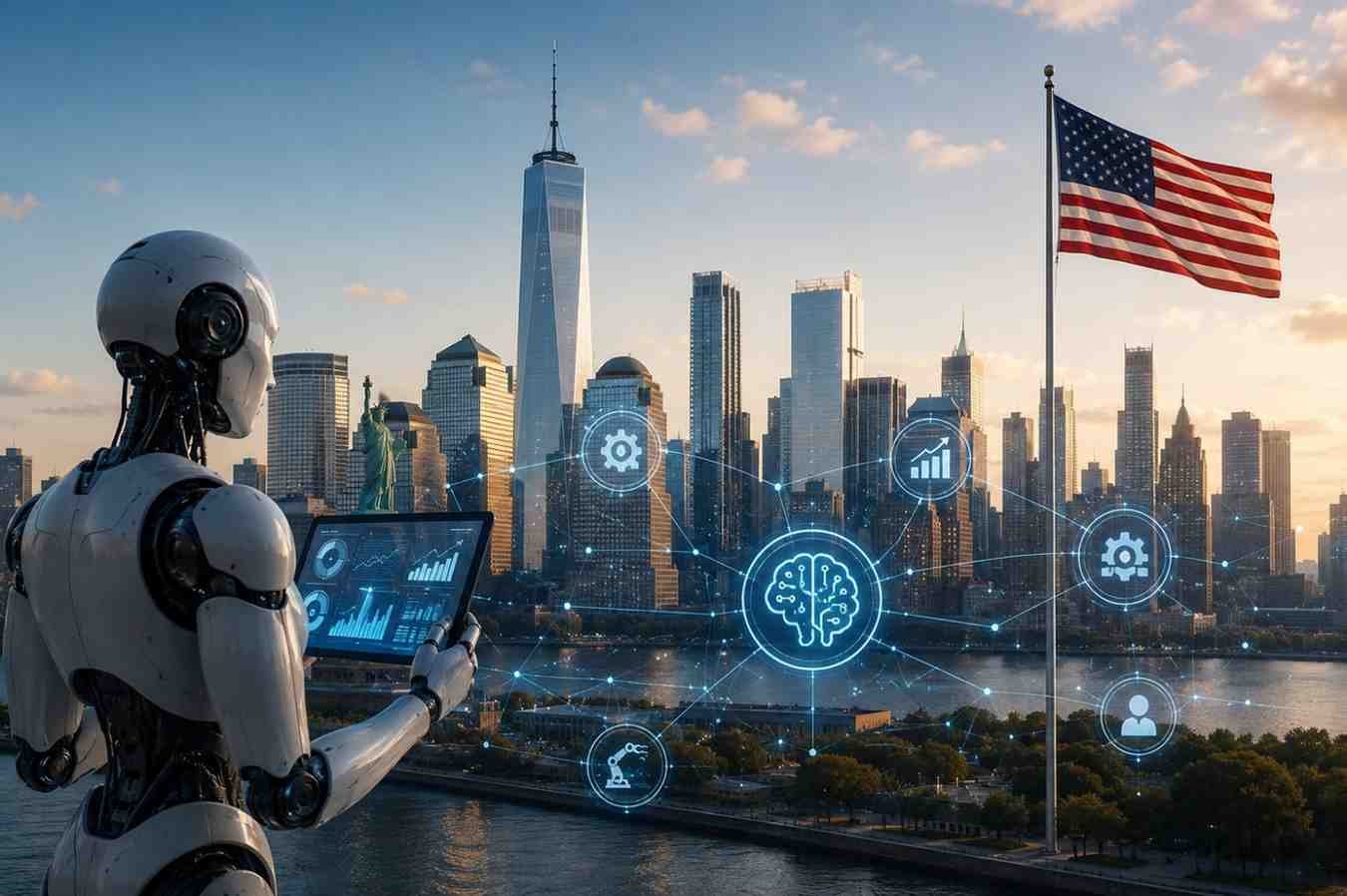
When people talk about AI, they often focus on automation. While reducing repetitive work is important, it only scratches the surface of what’s happening.
Artificial intelligence is changing how organizations think about growth. Instead of adding more employees to handle increasing workloads, businesses can use AI-powered solutions to scale operations more efficiently. This creates opportunities that extend beyond productivity improvements.
Companies are building new products based on predictive analytics, launching data-driven services, and developing entirely new customer experiences. AI-driven innovation is becoming a growth engine rather than simply a cost-cutting tool.
As a result, demand is increasing for AI consulting services, workflow automation specialists, data infrastructure providers, cybersecurity firms, and enterprise software developers. The opportunity isn’t just in the technology itself—it’s in the ecosystem forming around it.
Healthcare Is Building New Markets Around Intelligence
Healthcare has emerged as one of the most significant beneficiaries of AI adoption.
Medical imaging systems can now assist clinicians in identifying patterns across scans with remarkable accuracy. In some diagnostic areas, AI helps specialists review information faster while maintaining high levels of precision. This supports earlier detection and more informed treatment decisions.
Healthcare providers are also using generative AI to organize and summarize vast amounts of clinical information. Instead of spending hours reviewing unstructured records, professionals can access critical insights more quickly, improving workflow efficiency and patient care.
Another major area of growth involves pharmaceutical research and material discovery. Predictive modeling allows research teams to analyze potential compounds faster than traditional methods, shortening development timelines and opening new opportunities for biotechnology firms.
The result is a growing market for healthcare analytics platforms, AI implementation services, clinical decision-support systems, and data management solutions.
Financial Services Are Shifting Toward Real-Time Decision Making

Financial institutions have always relied on data, but AI adoption trends are transforming how that data is used.
Traditional audits often relied on reviewing information after events occurred. AI systems allow organizations to monitor activity continuously. This shift enables proactive risk management rather than reactive problem-solving.
Predictive fraud prevention has become one of the strongest examples of AI business opportunities in finance. Machine learning models can detect unusual behavior patterns within seconds, helping institutions stop unauthorized activity before significant losses occur.
Generative AI is also streamlining reporting processes. Large datasets can be transformed into structured compliance documentation, reducing manual effort while improving consistency and accuracy.
These developments are creating growing demand for regulatory technology, AI governance services, compliance platforms, and financial analytics providers.
Retail Is Turning Data Into Better Customer Experiences
Retail businesses operate in a highly competitive environment where customer expectations continue to rise. AI is helping companies meet those expectations while uncovering new revenue opportunities.
One of the most visible changes is hyper-personalization. Advanced algorithms analyze customer behavior, purchase history, and browsing patterns to recommend products that align with individual preferences. This improves audience engagement while increasing cross-selling opportunities.
Demand forecasting has also become more sophisticated. Retailers can process market signals, purchasing trends, and inventory data to anticipate changes before they happen. Better forecasting reduces waste, improves inventory management, and supports stronger profitability.
At the store level, AI-powered systems help teams respond more effectively to shifting demand. Real-time inventory insights enable faster decision-making and more efficient operations.
For technology vendors, consultants, and analytics providers, these changes continue to create substantial business growth opportunities.
Manufacturing and Logistics Are Becoming More Intelligent

Manufacturing has embraced AI as a tool for building more resilient and efficient operations.
Predictive maintenance has become a major driver of value. Rather than relying on fixed service schedules, manufacturers can monitor equipment performance continuously. AI systems identify early warning signs and help prevent costly downtime before failures occur.
Visual inspection technology is another area seeing rapid adoption. Computer vision systems can identify microscopic defects that might be difficult for human inspectors to detect consistently. This improves quality control while reducing waste.
In logistics, AI supports route optimization, supply chain visibility, and resource allocation. Fleet management systems process real-time information such as traffic patterns, weather conditions, and delivery schedules to improve operational efficiency.
These capabilities are creating opportunities for software developers, hardware manufacturers, cloud infrastructure providers, and intelligent automation specialists.
Why Media and Communication Businesses Are Evolving
One often-overlooked area involves the transformation of media and communication businesses.
AI is helping organizations analyze audience behavior, improve digital communication strategies, and deliver more personalized content experiences. Publishers, marketing firms, and content operations teams can process larger amounts of information while maintaining stronger audience engagement.
This shift also reinforces the importance of media-driven companies in an increasingly AI-powered economy. Organizations that effectively combine human creativity, data insights, and AI tools are often better positioned to build trust, reach targeted audiences, and adapt to changing consumer behaviors.
Rather than replacing creative professionals, AI is becoming a tool that enhances content strategy, research, distribution, and performance analysis.
Frequently Asked Questions: How Business Opportunities Created by AI Adoption Are Reshaping Entire Industries
1. What are the biggest business opportunities created by AI adoption?
Some of the largest opportunities include AI consulting, workflow automation, predictive analytics, healthcare technology, cybersecurity services, compliance solutions, and AI-powered software development.
2. Which industries are benefiting most from AI adoption?
Healthcare, finance, retail, manufacturing, logistics, and media are among the industries experiencing significant transformation through artificial intelligence.
3. How does AI create new business models?
AI enables organizations to offer personalized services, automate complex processes, monetize data insights, and develop scalable digital products that weren’t previously possible.
4. Can small businesses benefit from AI adoption?
Yes. Many AI tools are becoming more accessible and affordable, allowing small businesses to improve productivity, enhance customer experiences, and compete more effectively.
Why the Biggest Opportunities Often Appear Around the Technology, Not Inside It
When major technological shifts occur, the most valuable opportunities rarely come from the technology alone. They emerge from the businesses that help organizations implement, optimize, manage, secure, and scale that technology. AI is following the same pattern. While attention often focuses on large AI platforms, equally important opportunities are appearing across consulting, compliance, infrastructure, workforce development, digital communication, and industry-specific services. Organizations that understand these broader market dynamics are often better positioned to capture long-term value.
The future belongs to businesses that view AI as a foundation for innovation rather than simply a tool for efficiency.




Leave a Reply