
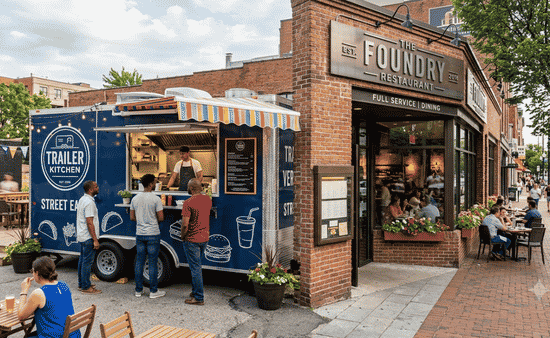
Rising commercial rents, labor shortages, and changing consumer expectations are prompting many food entrepreneurs to reconsider traditional restaurant models. For startups and expanding food businesses alike, the choice between investing in a mobile food trailer and opening a brick-and-mortar restaurant can have a significant impact on startup costs, operating expenses, and long-term profitability.
Understanding the financial trade-offs can help business owners make more informed investment decisions.
There is an important cost-benefit analysis that needs to be conducted on the differences between fixed and moving businesses to learn more about how to cope with this highly unpredictable macroeconomic climate, where all the players need to conduct an analysis of the capital cost implications versus revenue generation.
Initial Capital Expenditures
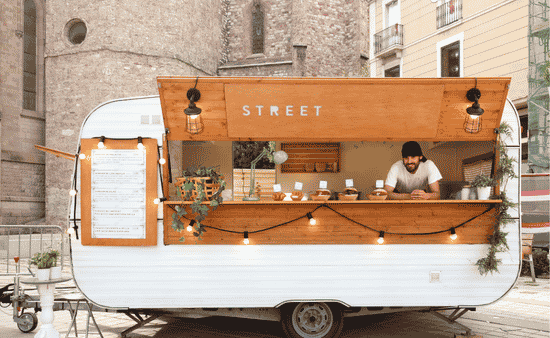
The first main difference between mobile food trucks and brick and mortar restaurants comes down to the amount of CapEx required. Traditional restaurant rentals need big deposits, interior work done, heating and cooling installed, and all of the codes followed. The whole process may end up costing anywhere from $150,000 to over $450,000. Alternatively, a mobile food truck that is completely ready can be bought for between $40,000 and $100,000.
Financial Showdown: Initial Startup & Monthly Operating Costs
| Cost Category | Mobile Food Trailer | Brick-and-Mortar Restaurant |
| Average Startup CapEx | $40,000 – $100,000 | $150,000 – $450,000+ |
| Monthly Rent / Location Fees | $500 – $1,500 (Permits/Lot fees) | $4,000 – $12,000+ |
| Monthly Insurance Cost | $150 – $300 | $1,000 – $2,500 |
| Average Monthly Utilities | $300 – $600 | $2,000 – $5,000 |
| Labor Cost Allocation | 15% – 25% of revenue | 30% – 40% of revenue |
Ongoing Overhead and Operating Expenses
There is great variation in operational leverage between the two models. Physical stores have very rigid fixed costs that do not change whether few transactions or many transactions take place. The mobile trailers on the other hand operate on a cost structure that is highly flexible.
Significant hidden overhead costs unique to brick-and-mortar operations include:
- Property tax and Triple Net Lease CAM expenses.
- Maintenance of grease traps, hood fire suppression systems, and structures.
- Utility base charges for maintaining constant temperature and refrigeration.
- Front of house labor expenses, including host and servers..
Scalability and Market Agility
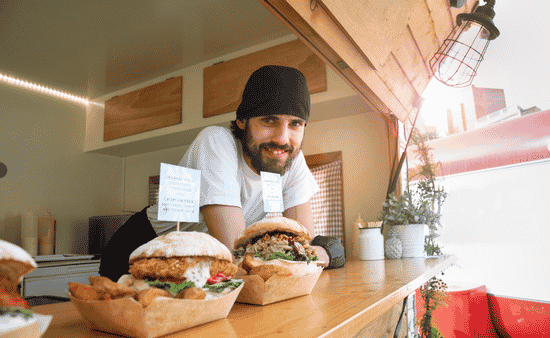
Food truck businesses have the upper hand in terms of geographical adaptability because they can move wherever there is a lot of human traffic or events taking place. Being able to do that decreases the probability of choosing a bad location, which tends to be a recipe for disaster for fixed businesses. Fixed businesses have the edge when it comes to volume scalability.
Financial Pro-Tip: When calculating your break-even point, mobile operators should focus heavily on volume-per-hour metrics during tight service windows, whereas brick-and-mortar operators must closely monitor their prime cost (combined labor and cost of goods sold) against a rigid fixed monthly overhead.
Risk Factors and Timeline to ROI
Due to lower initial debt burdens, mobile food trailers generally exhibit a compressed timeline to realize a return on investment (ROI).
The typical trajectory to achieve positive ROI for a mobile trailer involves:
- Months 1–3: Securing recurring local parking permits and optimizing high-margin event bookings.
- Months 4–9: Retaining consistent footprints to build brand equity and stabilizing food costs to under 30%.
- Months 10–18: Amortizing the initial low CapEx and entering net profitability.
But brick-and-mortar restaurants usually have a 24 to 48-month payback because of amortization on the build-out investment-a big expense on a restaurant.
Final Thoughts
Deciding whether to opt for a food truck or a traditional restaurant hinges upon how high you want your risk appetite and how you view the capacity of growth for your business. Mobile food trucks can be easily acquired because they offer fast depreciation and minimal fixed costs.
Traditional restaurants, on the other hand, are expensive and require significant capital investment but have large volumes and enterprise value potential. It is ultimately up to the operators to assess their capital position and business perspective to determine the most appropriate route forward. Investors and business people should look into these financial dynamics to learn more and better understand their portfolio investments.



Leave a Reply